

World News
These Emotion-Sensing Smart Glasses Could Track Your Mood, Eating Habits, and Mental Health


We know smart glasses can play podcasts and put an AI assistant in your ear, but what if they knew what you were feeling? That’s the idea behind Emteq Lab‘s Sense glasses. They’re not on the market yet, but the end goal is a lightweight pair of specs equipped with sensors that read minute changes in users’ facial muscles, all with the goal of detecting real-time mood shifts to unlock insights into health, eating habits, and more.
Emteq is one of a growing number of companies in the field of “affective computing,” technology designed to recognize, interpret, process, and/or simulate human emotions. For good or ill, the future is likely to be packed with the stuff.
How do emotion-sensing glasses work?

Credit: Emteq
The technology behind Emteq’s emotion-tracking glasses is sophisticated, but the concept is straightforward: the glasses’ inward-facing sensors monitor the electrical activity of your zygomaticus muscle group (smiling muscles), the corrugator supercilii group (forehead muscles), as well as the muscle groups that control your brow, and combines that information with heart-rate and head movement data, then puts it all together into a real-time record of your emotions you can access on your smart phone.

That’s the idea, anyway. Whether any machine can accurately interpret what emotions for everyone through facial muscle movement is a complex question. Research indicates that basic emotions like happiness, sadness, surprise, and disgust are expressed facially in similar ways across cultures, but cultural influences and individual differences affect how we display emotions. Some people have poker faces. Some people laugh when they’re scared. And anyone can smile when they’re feeling blue.
Use cases for emotion-sensing glasses
I recently spoke with Emteq’s CEO Steen Strand and saw a demo. The Sense glasses prototype seems to work as advertised in a normal-looking pair of eyeglass frames. The eventual vision for the technology spans everything from virtual meetings to mental health monitoring to dietary tracking.
Making virtual meetings more “natural”
“When we’re in a conversation, you want to see my face, I want to see yours. We can react to each other,” Strand said. “If you want to do that virtually, you have to know what my face is doing.” The idea is that expression-sensing glasses could make avatars and virtual interactions more “real” by putting what’s on your real face onto your digital face.
For some kinds of virtual conversations, this would be amazing, but what if I want to not look bored during a meeting? Either way, existing VR technology can do something similar, but according to Strand, Emteq’s tech provides a better solution. “A lot of existing technology, particularly in VR, is just more heavy on power and computing,” Strand said. “We’re using these very lightweight, low-power sensors that just look at a little tiny part of your face, and from that we can infer what your whole face is doing.”
Mental health
A constant monitor of real-life emotions could provide an additional diagnostic tool for mental health professionals, according to Strand. “The gold standard for diagnosing depression right now is a questionnaire,” he said. “Not only does that have inherent bias, it’s also a sliver in time. How you feel at one moment could differ from how you feel an hour later,” but a constant record of emotions would, presumably, be more revelatory of one’s mental state.
For people who have trouble knowing what emotion their face is displaying, whether because of a physical condition like facial paralysis or a mental health concern like autism, emotion-sensing glasses could provide a window to a sense that most of us take for granted.
What do you think so far?
Healthier eating
Maybe the most concrete application for Sense glasses involves monitoring eating habits. These specs can track chewing patterns, bite frequency, and eating speed—metrics that research links to weight management and digestive health. “You can tell how many chews you had that meal, how many bites, the spacing between your chews and bites,” Strand said. Some research has tied the speed of eating to calorie consumption at meals, so in theory micromanaging your chewing could help with weight loss goals, if it doesn’t drive you crazy first.
For people struggling with healthy eating or who have medical conditions requiring careful dietary monitoring, this could be useful. But it risks turning every meal into a performance review.
The bigger questions: privacy and humanity

Credit: Emteq
With any novel technology, a logical question is “how might this be used to further enshittify our daily lives?” There’s no shortage of dystopian hypotheticals here, as this is with any kind of affective computing. Imagine what advertisers and marketers would do with a record of how consumers feel about everything they see and experience, all day, every day. How much worse would algorithms get if they knew exactly how you felt about that TikTok? What if an employer had a real-time readout of which workers are smiling and which are furrowing their brows? Imagine how an oppressive government could use this tech against its citizens.
It’s probably unfair to pin those big ideas onto a smart glass monitor technology, and Strand says Emteq isn’t pursuing the collection and selling of general emotional data. “Our philosophy now is, that’s medical grade personal data that doesn’t get shared,” Strand said. But promises about data handling have a way of “evolving” as companies grow and face financial pressure.
When will Sense glasses be available to the public?
As for when you’ll be able to get your own chewing-and-feeling-monitoring specs, the short answer is, in the future, maybe. “Sometime next year, you’d expect us to put something out,” Strand said. “We’re still debating whether or not we’re gonna go straight to consumer. There are lots of different ways to go to market with the tech. And so we’re still balancing some of that out.”


World News
A Q-tip and spotless car were key evidence linking Bryan Kohberger to murders of 4 Idaho students

BOISE, Idaho (AP) — The lead prosecutor tasked with finding justice for four University of Idaho students killed in a grisly quadruple stabbing more than two years ago laid out his key evidence Wednesday at a court hearing for Bryan Kohberger, who agreed to plead guilty earlier this week to avoid the death penalty.
The evidentiary summary — recited by lead prosecutor Bill Thompson before Kohberger entered his pleas — spun a dramatic tale that included a DNA-laden Q-tip plucked from the garbage in the dead of the night, a getaway car stripped so clean of evidence that it was “essentially disassembled inside” and a fateful early-morning Door Dash order that may have put one of the victims in Kohberger’s path.
These details offered new insights into how the crime unfolded on Nov. 13, 2022, and how investigators ultimately solved the case using surveillance footage, cell phone tracking and DNA matching. But the synopsis leaves hanging key questions that could have been answered at trial — including a motive for the stabbings and why Kohberger picked that house, and those victims, all apparent strangers to him.
The small farming community of Moscow, in the northern Idaho panhandle, had not had a homicide in about five years when Kaylee Goncalves, Ethan Chapin, Xana Kernodle and Madison Mogen were found dead at a rental home near campus.
Kohberger, now 30, had begun a doctoral degree in criminal justice at nearby Washington State University — across the state line from Moscow, Idaho — months before the crimes.
“The defendant has studied crime,” Thompson said, as the victims’ family members dabbed at their tears. “In fact, he did a detailed paper on crime scene processing when he was working on his Ph.D., and he had that knowledge skillset.”
What we learned from the hearing
Kohberger’s cell phone began connecting with cell towers in the area of the crime more than four months before the stabbings, Thompson said, and pinged on those towers 23 times between the hours of 10 p.m. and 4 a.m. in that time period.
A compilation of surveillance videos from neighbors and businesses also placed Kohberger’s vehicle — known to investigators because of a routine traffic stop by police in August — in the area.
On the night of the killings, Kohberger parked behind the house and entered through a sliding door to the kitchen at the back of the house shortly after 4 a.m., Thompson said. He moved to the third floor, where Madison Mogen and Kaylee Goncalves were sleeping.
After killing both of them with a knife, Kohberger left a knife sheath next to Mogen’s body. Both victims’ blood was later found on the sheath, along with DNA from a single male that ultimately helped investigators pinpoint Kohberger as the only suspect.
On the floor below, another student was still awake. Xana Kernodle had ordered Door Dash not long before, and as Kohberger was leaving, he crossed paths with her and killed her with a large knife, Thompson said. He then killed her boyfriend, Ethan Chapin, who was sleeping in Kernodle’s bedroom.
Kohberger left two others in the house alive, including one roommate who was expected to testify at trial that sometime before 4:19 a.m. she saw an intruder there with “bushy eyebrows,” wearing black clothing and a ski mask.
Roughly five minutes later, the car could be seen on the next-door neighbor’s surveillance camera. speeding away so fast “the car almost loses control as it makes the corner,” Thompson said.
What did Kohberger do next?
After Kohberger fled the scene, Thompson said, his cover-up was elaborate.
Prosecutors believe he drove backroads to his apartment in Pullman, Washington, to avoid surveillance cameras on the major roads and didn’t turn his cell phone back on until 4:48 a.m. By 5:26 a.m., he was back in Pullman, Thompson said.
Later, Kohberger changed his car registration from Pennsylvania to Washington State — significant for investigators who were combing through surveillance camera footage because Pennsylvania law doesn’t require a front license plate, making it harder to identify the vehicle.
And by the time investigators did catch up with him weeks later, his apartment and office in nearby Pullman were scrubbed clean.
“Spartan would be a kind characterization. There was nothing there, nothing of evidentiary value was found,” Thompson said of Kohberger’s apartment.
The car, too, “had been essentially disassembled inside,” he added. “It was spotless. The defendant’s car had been meticulously cleaned inside.”
The Q-tip that broke the case
Investigators had honed in on Kohberger, but they needed to prove he was their suspect.
With the DNA of a single mystery male on the knife sheath, they worked with the FBI and the local sanitation department to secretly retrieve garbage from the Pennsylvania home of Kohberger’s parents, seeking a DNA match to their suspect.
“They conducted what’s called a trash pull during the nighttime hours,” Thompson said, and “took trash that had been set out on the street for collection” and sent it to Idaho’s forensics lab.
The pile of garbage yielded investigative gold: A Q-tip that contained DNA identified “as coming from the father of the person whose DNA was found on the knife sheath that was found by Madison Mogen’s body on the bed,” he said.
With that, Kohberger was arrested at his parents’ home in Pennsylvania, where he had gone for the holidays, and ultimately was extradited to Idaho for prosecution.
The mysteries that remain
Even while prosecutors detailed that night, a key question remains: Why did Kohberger target that house and those victims? Did he know them? And what was his motive?
“We do not have evidence that the defendant had direct contact with 1122 or with residents in 1122, but we can put his phone in the area on those times,” Thompson said, referring to the house number where the murders took place.
Some of that evidence may have come out at trial, and may yet be contained in documents related to the case that have been sealed by the court until after a July 23 sentencing hearing. A gag order in place for all attorneys in the case is still in effect as well.
Those documents include witness lists, a list of exhibits, an analysis of the evidence, requests for additional discovery, filings about mitigating factors and various unsuccessful defense motions that sought to introduce alternative suspects, among other things.
The families of the victims are split over the plea deal
With the case solved, families remain divided over its resolution.
The deal stipulates that Kohberger will be spared execution in exchange for four consecutive life sentences. He also waived his right to appeal and to challenge the sentence.
Chapin’s and Mogen’s families support the deal.
“We now embark on a new path. We embark on a path of hope and healing,” Mogen’s family said in a statement.
The family of Kaylee Goncalves publicly denounced the plea deal ahead of Wednesday’s hearing and her father refused to attend the proceedings.
Goncalves 18-year-old sister, Aubrie Goncalves, said in a Facebook post that “Bryan Kohberger facing a life in prison means he would still get to speak, form relationships, and engage with the world.”
“Meanwhile, our loved ones have been silenced forever,” she wrote.

NEWYou can now listen to Fox News articles!
Earlier this year, Max Homa said he had a “come-to-Jesus” moment when he decided to delete X, formerly Twitter.
The PGA star was once active on the app, but he said in March the platform is now “for the sick.”
“I was sick. I’m just trying to get healthy now,” Homa said at the time.
CLICK HERE FOR MORE SPORTS COVERAGE ON FOXNEWS.COM
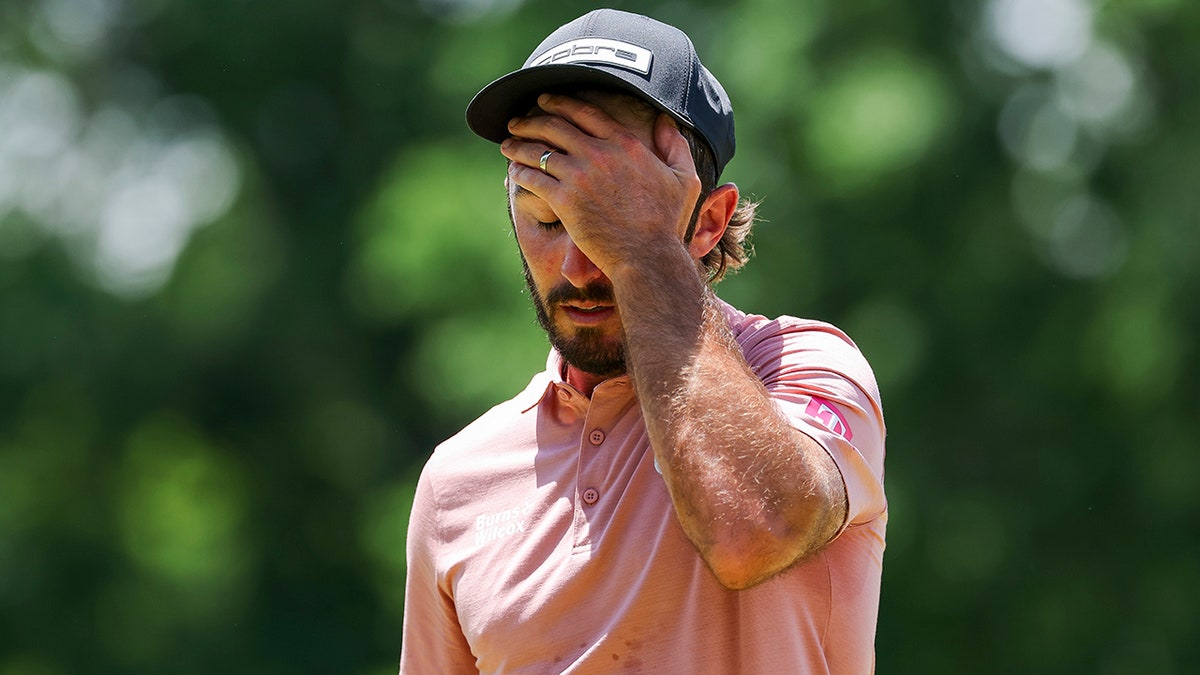
Max Homa reacts after a double bogey on the ninth green during the final round of the PGA Championship at Quail Hollow Country Club May 18, 2025, in Charlotte, N.C. (Kevin C. Cox/Getty Images)
Ahead of the John Deere Classic, Homa stood firm on his personal boycott of the “awful, awful place.”
“The reason for that is just the vitriol you read online. It has become a safe haven for people who are, I think, angry at themselves. It is quite absurd how comfortable people feel writing awful things,” Homa told reporters Wednesday.
“Twitter or X or whatever is an awful, awful place. It took me a while to catch onto how impactful that can be and how much of a waste of energy. I miss the connection with the fans, but nothing comes without so much hate and anger. There’s a lot of love in there, too, but, unfortunately, it gets overwhelmed with one really bad one.”
Homa hinted that the rise in gambling, which he said “seems fun as hell in golf,” may be contributing to the online vitriol.
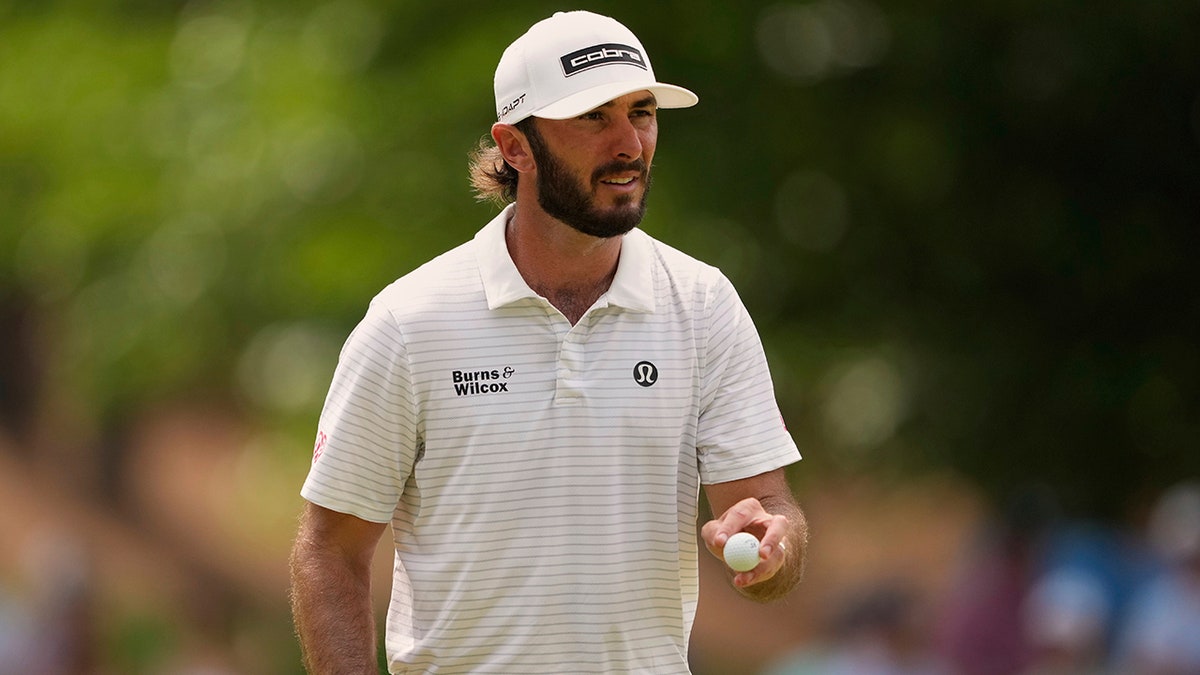
Max Homa waves after making a putt on the sixth hole during the second round of the PGA Championship at the Quail Hollow Club May 16, 2025, in Charlotte, N.C. (AP Photo/Matt York)
GOLF INFLUENCER TISHA ALYN CARVES HER OWN PATH IN THE SPORT
“People say some bad, bad things on the internet. You get people telling you you should die on the internet. It has nothing to do with not connecting. I’d love to keep connecting with people, but I try to do it in person a bit more because I have yet to meet somebody in person who has said anything even remotely mean.
“It’s a safe haven for a–holes, for lack of a better term.”
Homa has struggled of late. He’s missed seven cuts in 16 tournaments this year with just one top 25 finish, which came at the Masters. That was his first made cut since last year’s Open Championship, but, since then, he has finished 70th, tied for 30th, tied for 60th, tied for 51st and tied for 54th with another pair of missed cuts.

Max Homa tees off on No. 4 during the second round of the Masters at Augusta National Golf Club April 11, 2025. (Grace Smith/Imagn Images)
CLICK HERE TO GET THE FOX NEWS APP
Last year, he was ranked 10th in the world. Last month, he was carrying his own bag for 36 holes of U.S. Open qualifying. He missed out on the tournament after a heartbreaking three-putt on his final hole, where two putts would have put him into the Oakmont tournament.
Follow Fox News Digital’s sports coverage on X, and subscribe to the Fox News Sports Huddle newsletter.
World News
Jac Morgan: Andy Farrell says British and Irish Lion back row can play ‘anywhere he wants’

Andy Farrell heaped praise on Wales flanker Jac Morgan and joked he can play “wherever he wants” in the British and Irish Lions back row after his man of the match display in the win over Queensland Reds.
Morgan strengthened his claim for a Test start as he produced a stellar display for the tourists in their comfortable 52-12 victory in Brisbane on Wednesday.
Morgan, 25, impressed in a familiar role at seven but Lions head coach Farrell suggests the versatile forward could also be deployed at six or even number eight.
“He was everywhere. His offloading game was great, he was aggressive with his hitting,” said Farrell.
“He’ll be delighted. The competition has started and there are reactions all over the place to come.
“If he plays like he did today, he can play wherever he wants.”
Farrell was waxing lyrical for good reason.
Morgan powered over for a try and carried for 44 metres – the most of any forward on the field.
He was equally effective in defence, making three turnovers and joining captain Maro Itoje and number eight Jack Conan with a game-high 18 tackles.
Morgan is in fierce competition with England stalwart Tom Curry, Ireland’s former World Rugby Player of the Year Josh van der Flier and high-octane youngster Henry Pollock as the recognised open-side flankers.
Ireland captain Caelan Doris’ absence from the tour, though, means there is not yet a standout candidate for the number eight role, with Conan and Englishman Ben Earl the leading contenders.
Morgan, the only remaining Wales player in the squad following Tomos Williams’ tour-ending injury, has no problem playing in an alternative position.
“I want to try and be as versatile as possible,” Morgan told BBC Sport.
“A lot of boys are trying to play in different positions so it’s just making sure we learn all of our roles within the back row because you never know, with the games coming thick and fast, you could end up playing in any position.”

Sandals and Beaches Lead a Tourism Comeback for Jamaica, as Minister Bartlett Has A Christmas Wish For Visitors

How to Create a More Organized and Comfortable Living Space

Cinnamon Hotels & Resorts prioritises guest safety, colleague support, and community recovery as affected properties resume full operations

How Saudi Billions Are Quietly Reshaping the Caribbean?

Prague Convention Bureau unveils new campaign video celebrating the city’s creative MICE identity

Embraer develops new AI-powered Smart Planning solution

OACM and WTFI Forge Strategic Partnership to Make Ocean Protection a Core Pillar of Global Tourism

ECTAA welcomes balanced compromise on revised Package Travel Directive

Go World Travel Magazine Unveils 12 Bucket List Adventures to Gift This Year

Roasted Radicchio with Manchego

Black History Facts I had to Learn on My Own pt.6 📜

If Africa never existed ???😲😭

Black history is f**ked up! 🫢 #ChappellesShow #DaveChappelle #Comedy #BHM #BlackHistoryMonth

A Closer Look: Afro-Mexicans 🇲🇽

Navigating My First Weeks at the Met Office and Championing Climate Science

No African pre-Columbus DNA? 🤯🤯 #history #mesoamerica #mexico #african

😱Ancient African Technologies that would Surprise most people! Part 2 #africanhistory

Major African Tribes taken away during the Atlantic Slave Trade🌍 #slavetrade #africanamericanhistory

South African History Summary 🇿🇦 From First Settlements to the Anglo Boer War

Cameroon 🇨🇲 World Cup History (1962-2022) #football #realmadrid #shorts

Evidence of African Nobility all over Medieval Europe.

african presence in mexico part 1

Did Africans Discover America Before Christopher Columbus?

The Black Presence in Renaissance Europe in 4K- Historical Paintings of Africans Brought To Life

Africans Visited the Americas Long Before Columbus | African History

Dr. Ivan Van Sertima – African Presence in Early Asia

African Presence in Early Europe – Dr Ivan Sertima – PART 1

History of Cameroon

Black History (It’s Yours) | Black History Month Rap Anthem | Animated Music Video

History of Africa from the 16th to the 20th Century
-
 African History2 years ago
Black History Facts I had to Learn on My Own pt.6 📜
-
 African History1 year ago
If Africa never existed ???😲😭
-
 African History1 year ago
Black history is f**ked up! 🫢 #ChappellesShow #DaveChappelle #Comedy #BHM #BlackHistoryMonth
-
 African History6 years ago
A Closer Look: Afro-Mexicans 🇲🇽
-
 Weather1 year ago
Navigating My First Weeks at the Met Office and Championing Climate Science
-
 African History3 years ago
No African pre-Columbus DNA? 🤯🤯 #history #mesoamerica #mexico #african
-
 African History2 years ago
😱Ancient African Technologies that would Surprise most people! Part 2 #africanhistory
-
 African History3 years ago
Major African Tribes taken away during the Atlantic Slave Trade🌍 #slavetrade #africanamericanhistory